
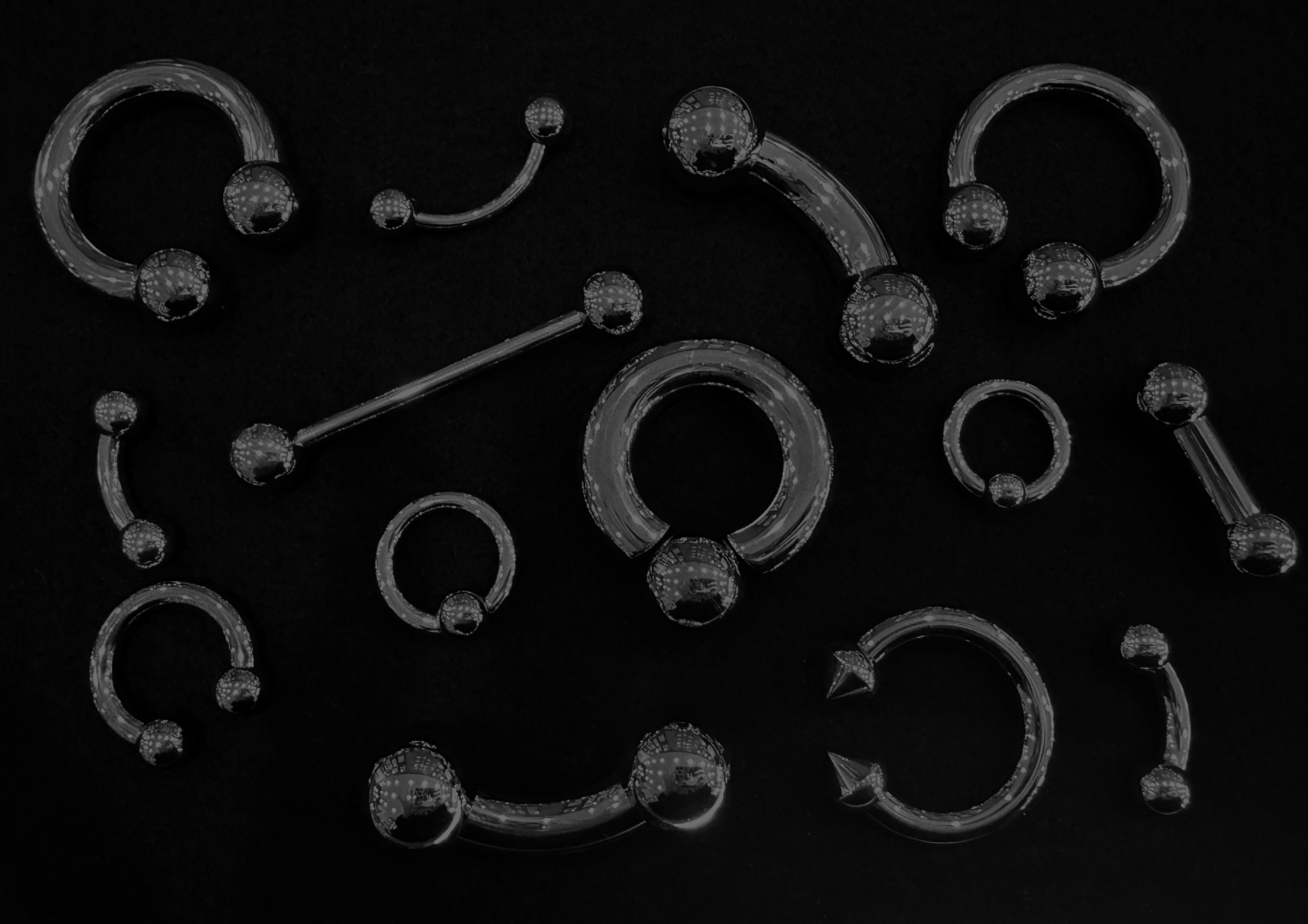
GENITAL PIERCINGS AT BROADWAY
Our piercers are proud to be among the few practitioners in Sydney who specialise in safe, high-quality genital piercings. We offer every safe and anatomically viable placement, with intimate piercings making up a significant part of our practice.
People choose genital piercings for many reasons. For some, they're purely decorative. For others, they're about confidence, sexual function, sensation, gender affirmation, or reclaiming ownership of their body. Every reason is valid.
Genital piercing has a long history across multiple cultures. Historical records describe the Ampallang as a rite of passage among the Dayak and Iban peoples of Borneo. In the modern Western body piercing movement, pioneers including Jim Ward, Elayne Angel and Doug Malloy helped bring intimate piercing into professional practice, establishing many of the techniques and standards still used today.
Despite this history, conversations about genital piercings remain uncommon. We're passionate about changing that by providing accurate education, professional care, and a completely judgement-free environment.
Many genital piercings are chosen for the way they can enhance sexual sensation. Depending on the placement, jewellery may increase stimulation for the wearer, their partner, or both. Some people enjoy the visual aesthetic, while others appreciate the physical sensations that different jewellery styles can provide. As with all anatomy, results vary from person to person.
For others, the decision is deeply personal. Some survivors of sexual violence choose intimate piercings as an act of reclamation, finding empowerment through making a choice about their own body. Others seek genital piercings as part of their gender affirmation journey. Placements can be selected to complement an individual's anatomy and personal goals, helping them feel more comfortable and at home in their body.
No two bodies—or reasons for getting pierced—are the same. We take the time to understand your goals before recommending placements that are both anatomically suitable and aligned with your intentions.
At Broadway Tattoo, we believe genital piercings are about more than jewellery. They're about autonomy, confidence, self-expression, and the freedom to make informed decisions about your own body. Whether you're seeking decoration, enhanced sensation, gender affirmation, or personal empowerment, you'll be met with professionalism, discretion, and zero judgement.
In collaboration with HERO Condoms

We perform a multitude of below-the-belt piercings every year. Because they're among the most personal procedures we offer, we believe they deserve more than just quality jewellery and expert technique. They deserve proper aftercare, and honest conversations about sexual health, bodily autonomy, and safer sex.
That's why every genital piercing performed comes with a complimentary HERO care package. Inside, you'll find a pack of HERO Natural Condoms and their water-based lubricant.
We believe that if you're going to do something, do it properly. HERO shares that same philosophy. Their products are ethically manufactured, certified vegan, and every purchase helps fund their one-for-one donation program, providing essential sexual wellness products to communities in need. Every product is designed with safety, quality, and accessibility in mind.
This collaboration is about more than free condoms. It's about confidence, education, and making informed choices. Whether you get pierced for pleasure, function, self-expression, or reclaiming your body, we're here every step of the way.
RELEVANT INFORMATION ABOUT GENITAL PIERCINGS
Heavily referenced from ‘The Piercing Bible’ by Elayne Angel, 2009 edition.
Written and prepared by Georgia Gard, @hole.punch3r. Professional piercer since 2017.
In collaboration with Rob Wommelsdoff, @hand_made_holes. Professional piercer since 1998
NOT TO BE TAKEN AS MEDICAL ADVICE.
How much does it hurt?
As with all piercings, there is always an element of pain - we are pushing a needle through your body. However, also with all piercings, it is never as bad as you’d expect it to be. Most recipients compare the feeling to a dull shock, which quickly subsides once the piercing is over. There are, of course, exceptions to this - piercings that pass through the glans will always be an exception, like an Ampallang or a clitoris piercing. Those with AMAB anatomy who have had ‘zipper accidents’ always find said whoopsies to be more painful than most genital piercings.
As the piercing is healing, it is expected that the surrounding area around the piercing will feel tender and almost bruised. These ‘growing pains’ can last around a week or two, especially if the jewellery gets knocked around. Once the piercing has completely healed, it will not be painful unless there is an external factor at play (stretching/tugging/etc.).
Healing
Because of the type and amount of tissue that’s pierced, most genital piercings mature after around 4-8 weeks, and completely heal after 3-6 months. Depending on the type of tissue pierced, most piercings can be safely stretched after 3+ months after the piercing is performed. Flesh piercings (eg. Christina’s) can take around 12 months to heal, as more tissue is pierced and is generally less vascular than a mucosal placement.
Bleeding
Areas with high blood flow, like the genitals, are prone to bleeding both during and after the piercing procedure. Using sanitary products like pads and liners are recommended during the first week of healing to manage this - they can also act as a cushion to make sitting that little bit more comfortable as you get used to having a new piercing. They also help promote a clean environment for your piercing to exist in, too.
Lifestyle Considerations
Before deciding if a genital piercing is right for you, it’s important to take into account lifestyles as well as anatomical concerns. Certain professions, like sex work, or recreational swimmers/cyclists may need to take time off work/extracurriculars in order for the piercing to heal. Athletes may also need to take time away from the track depending on the placement pierced, as constant friction and moisture created from sweat can create unnecessary problems.
Hygiene
It is of utmost importance that a fresh genital piercing has a clean environment to exist in. Clean/fresh underwear and regularly changing sanitary products help promote this, as well as following cleaning instructions outlined in your aftercare. Before cleaning, clean hands are a must, even if your hands aren’t directly touching the fresh piercing/surrounding tissue.
Those with penises are advised to not allow their (pierced) penis to enter the toilet bowl, even if it doesn’t come into contact with the bowls’ walls/water - it can be suspended/held during urination. Always put down something clean before sitting on a (questionable) surface whilst naked.
Underwear/Clothing
Full coverage, supportive underwear are more comfortable than other types (g-strings, thongs, etc.) and generally have the gusset to support a sanitary product (if using). Natural fabrics, like cotton, allow better ventilation and are generally more absorbent/biocompatible than polyester blends.
Tight pants with a defined inner cross seam can put pressure on the piercing, especially when in a seated position. Adjusting the seam after sitting is an option, just make sure you’re not accidentally pinching the jewellery instead of the fabric. Pants without inner seams tend to be more comfortable as there is little to no direct pressure on the piercing (except when seated).
Urinating
Transurethral piercings, like the Princess Diana and Prince Albert, come into the direct stream of urine, and can cause a stinging sensation when urinating. Certain placements, like inner/outer labia piercings may also come into contact with the stream. Submerging the piercing into a clean glass of water, or pouring water/saline over the piercing during urination can help reduce any stinging. Staying hydrated during the healing period and limiting intake of vitamin C further dilutes the acidity of urine, thus making it more comfortable overall. Urine will not harm the healing piercing, as long as it is your own.
Because of the type of tissue Price Alberts’ pierce through, it is expected to have some ‘dribbles’ through the piercing site, especially if it has experienced some passive stretching. The piercing can be “plugged” using a finger, or tissue paper to further control the stream. This can continue after the piercing has been retired, depending on how much the tissue shrinks. Also, depending on how much the jewellery fills the urethra, the stream may be ‘split’. Urinating in a seated position and wiping the penis/piercing afterwards is a great way to mitigate any unnecessary clean up.
Bathing
As with all body piercings, it’s recommended to not soak them (ie. taking a bath) for the first month of healing as all bodies of water can harbour bacteria. Showering after getting a genital piercing is recommended over taking a bath as you can control the flow of water to the area, ensuring that the piercing and your body is cleaned properly whilst maintaining safe piercing aftercare.
Shower gels and exfoliants must stay away from the piercing - most of them contain alcohol and additives which can harm the piercing. Dedicated genital wash may be used at your own discretion, but is not needed for the purposes of healing your new piercing and still poses a risk for developing cells. Wash-cloths may be used, as long as they are clean and you are gentle!
Depilation
Hair removal/management is not necessary for healing/getting a genital piercing. Having minimal pubic hair can be beneficial for both the client and the piercer in terms of marking/finding the most suitable placement and minimises the risk of accidental tugging and pulling. We will never tell you what to do when it comes to pubic hair. If you prefer to stay trimmed, it’s advised to wait a couple weeks after getting the piercing. Small eyebrow razors can be used for the hard-to-reach areas around the piercing, but only use these once everything’s healed and use caution.
Even though the titanium we use does not conduct heat, laser technicians may advise/require jewellery removal before laser hair removal. If you have an appointment booked, check with them to see what their policies and recommendations are. We carry retainers in all different shapes and sizes for situations like these!
Stretching
Passive stretching through softer/mucosal tissue is to be expected, especially if the wearer prefers heavier jewellery (like steel). Within reason, genital piercings can be stretched upwards of 10mm. Every body and every piercing is different - stretching can typically begin after 3 months of healing, with cooldown periods of 3-4 months between stretching. Others may take longer or sooner. Taking it slow and steady will always win the race.
Continuing Safe Sex
Safe sex can continue really any time after getting a genital piercing, however, we like to recommend waiting 2-4 weeks. This is because, during that time, the piercing will be incredibly tender, and any kind of unnecessary movement can cause further discomfort and disrupt healing cells developing. This also allows time for the piercing to healing and enter the maturation phase so minimal movement poses less of a risk to healing.
Protective barriers, like condoms and/or dental dams MUST be used for the first month or so of healing a genital piercing, even if sexual activity remains with a monogamous partner. This is to minimise any risk of infection to the piercing, or transmission of STIs or BBPs. These barriers must also be applied when using sex toys, even when it is cleaned thoroughly before/after use. Water-based lubricants can ease tugging sensations on the jewellery and can further protect the integrity of the latex being used. It may also take time for you (and your partner) to get used to having a new genital piercing. Starting things slowly with a barrier can help you (both) adjust to the new sensations.
Piercings and Partners
Sex is, more often than not, a two player game, and all players must know the rules and conditions in which to play. Genital piercings can unlock a whole new world of sexual pleasures and practices, and they can attract or deter partners. In a perfect world, our partners would be 100% supportive of the choices we make, especially when it comes to our bodies and autonomous decisions to modify them. Unfortunately, this isn’t always the case and some (potential) partners can be totally turned off by the idea.
For those with long-term partners considering getting a genital piercing, engage in a conversation with them about your plans. A surprise piercing may cause conflict, whether that’s from their distaste in such modifications, or even the small sexual hiatus necessary to heal the piercing. Ideally, they would be excited for this new adventure that you’re about to start, and may even be encouraged to delve into the world of genital piercings themselves.
Before engaging in sexual activities with a potential new partner, letting them know about your piercings can help them make the best decision for themselves for whether they want to enter that world or not. Healthy conversations about sex are paramount to any intimate relationship, casual or committed.
If your partner also has genital piercings, make sure your placements and jewellery are compatible with each other - there's nothing worse than getting a circular barbell caught in a captive ring! If jewellery does get intertwined, communicate this with your partner calmly and take a minute to untangle and check everything’s in its right place. Accidents like this can happen, just remember that forcefully pulling away can only end in damage to the piercing/s.
Think we missed something? Want some more info? Let us know.